

🌐 Key IT Trends in 2025
11/28/20251 min read
My🌐 Key IT Trends in 2025
💡 AI & AI-Powered Decision Making
2025 is seeing a shift from AI as a novelty to AI as a core decision-making partner: companies are using AI-driven insights to optimize workflows, forecast markets, predict demand, and guide product development.
Generative AI — tools that can generate text, images, code — will continue to expand across functions: content creation, design, software development, marketing.
🤖 Rise of AI Agents & Hyperautomation
2025 could be the year of “agentic AI” — AI-systems that do more than assist: they can plan, act, automate workflows, coordinate tasks across systems. This means bigger autonomy for AI in enterprise operations.
Combined with hyperautomation (AI + RPA + workflow automation), firms will increasingly use smart workflows — automating repetitive tasks and freeing up humans for higher-value work.
📶 Edge Computing, IoT & Distributed Data Processing
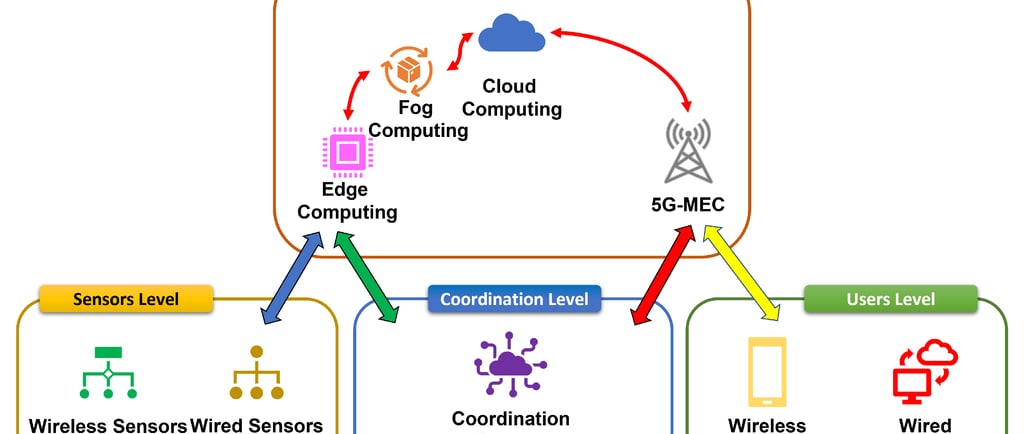
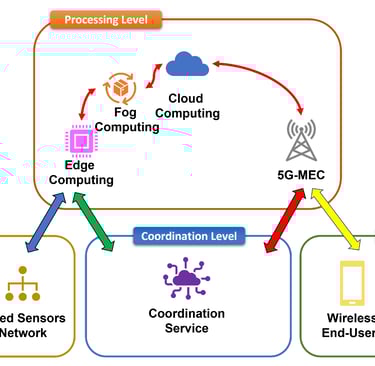
As IoT expands and data volumes soar, edge computing — processing data near its source rather than centralized cloud — becomes critical. This reduces latency and supports real-time applications.
The synergy of IoT + edge computing + AI enables “smart” systems: real-time analytics, predictive maintenance in industries, smart-city / smart-infrastructure applications.
⚛️ Emerging Tech: Quantum + AI & New Models of Computing
2025 also marks increasing interest and experimentation with quantum computing, especially where classical computing hits limits — e.g. cryptography, large-scale simulation, optimization.
When combined with AI, quantum computing could enable breakthroughs in areas like drug discovery, complex modeling, data security — making this a high-payoff long-term bet.
🔒 AI-Driven Cybersecurity & Risk Management
As threats become more sophisticated, AI is becoming a key tool in cybersecurity: detecting anomalies, predicting attacks, automating responses, and reducing breach impact and costs.
With more distributed systems (cloud + edge + IoT) and complex infrastructure, integrating AI for security and threat prevention becomes more critical than ever.